The Major UI/UX Design Trends 2022 To Keep Tabs On!!

Shubhangi Choudhary
Marketing Manager @ RadiansysIntroduction
The number of global app downloads is expected to touch a mark of 275 billion in 2022. Such reports only give a glimpse of the immensely large app market that is filled with challenges. One such crucial yet exciting challenge is app design — UI/UX.
An app's UI/UX is the major determining factor of its success in modern times where the first impression is all it takes. With plenty of rivals around, app owners can't afford to let any thread loose in weaving the best experiences for their customers. Astonishing UI/UX can have apps winning the competition by grabbing user attention, boosting traffic, increasing conversions, and gaining an edge.
There exist plenty of methods that can generate great results at designing a UI and UX for modern-day apps that deliver smooth and effective interactions. What's important is to keep flowing in the direction of the latest app design trends. This article walks through the top UI/UX design trends 2022 that are likely to last.
Best UI design trends for 2022 and beyond
Out of the 3.48 million Android and 2.22 million iOS apps available in major app stores in 2021, the truly successful ones tend to have the catchiest interfaces. UI design trend checks are unskippable today as user demands evolve.
Dark theme
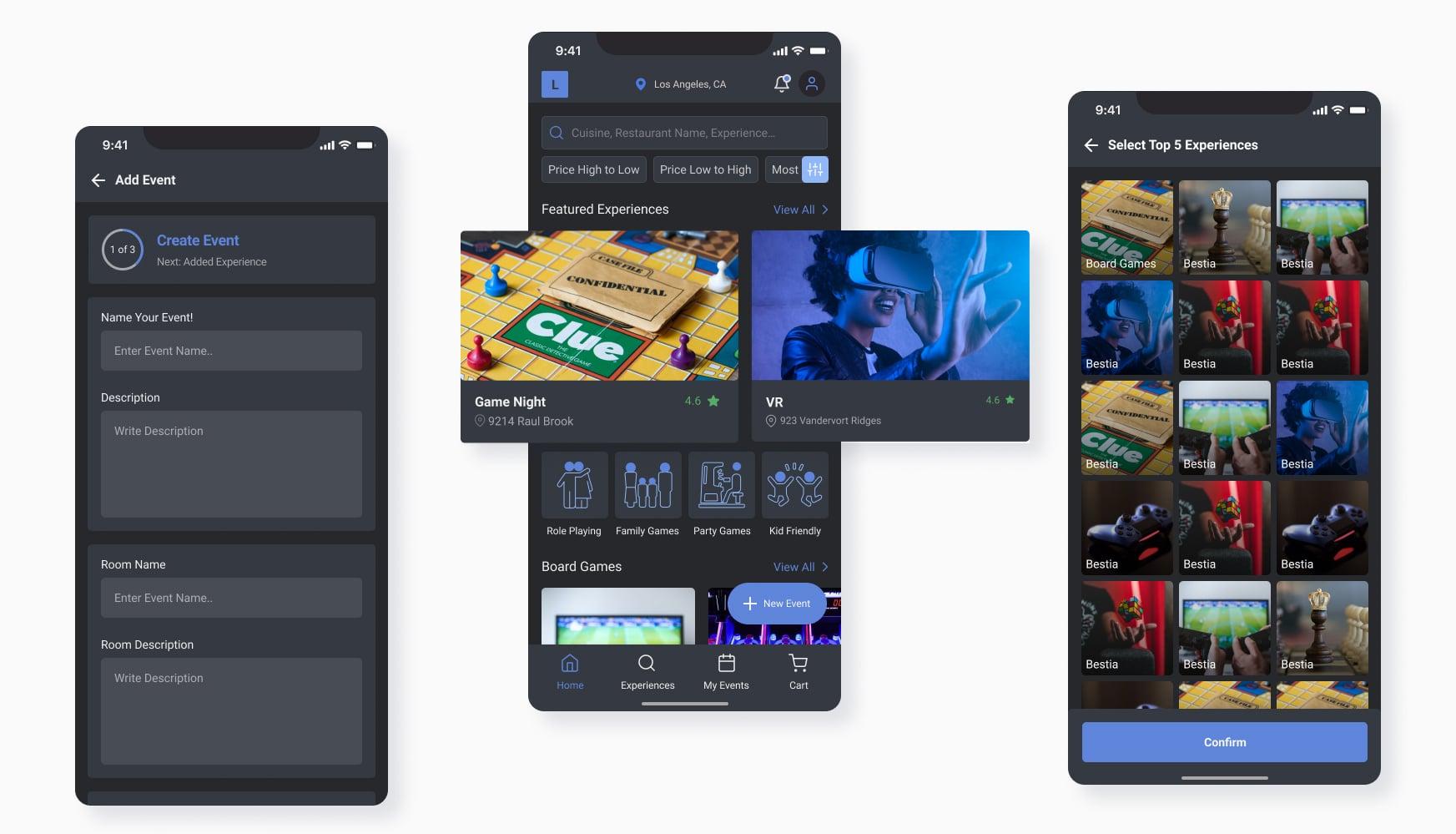
Dark themes have become a staple, loved by users on social media platforms and beyond. Many apps now offer a toggle to switch between dark and light modes. Dark UI adds stylish aesthetics, reduces eye strain, and can save battery on OLED screens. The trend isn't just black backgrounds but a broader palette of deep tones and carefully balanced contrast.
3D revolution
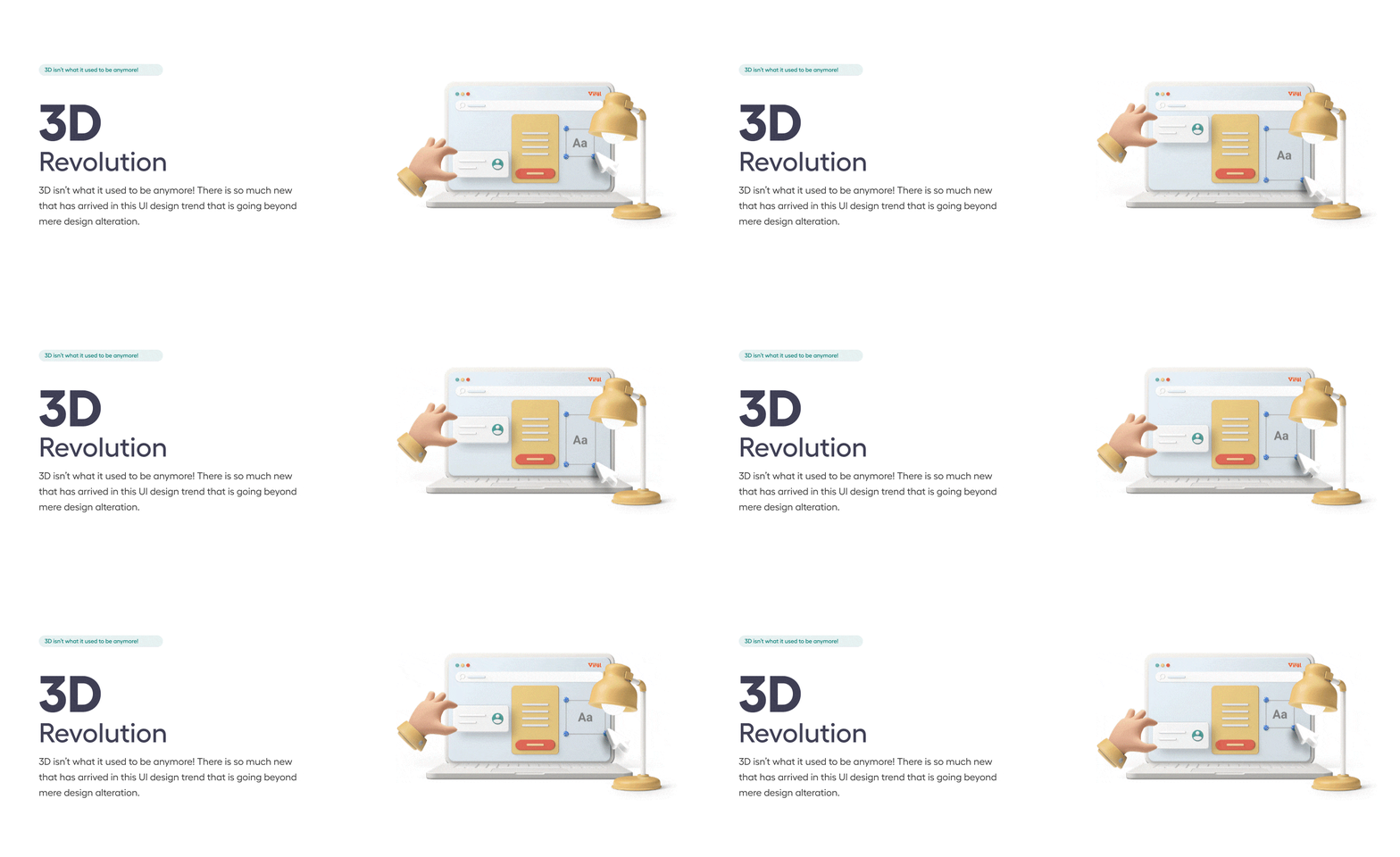
3D elements are evolving from simple visuals to interactive, functional components. Geometric 3D designs make elements stand out without compromising usability, and improved performance has reduced the historic loading penalties. Designers are focusing on smaller, high-quality 3D frameworks that emphasize originality and inclusivity.
Maximized interaction
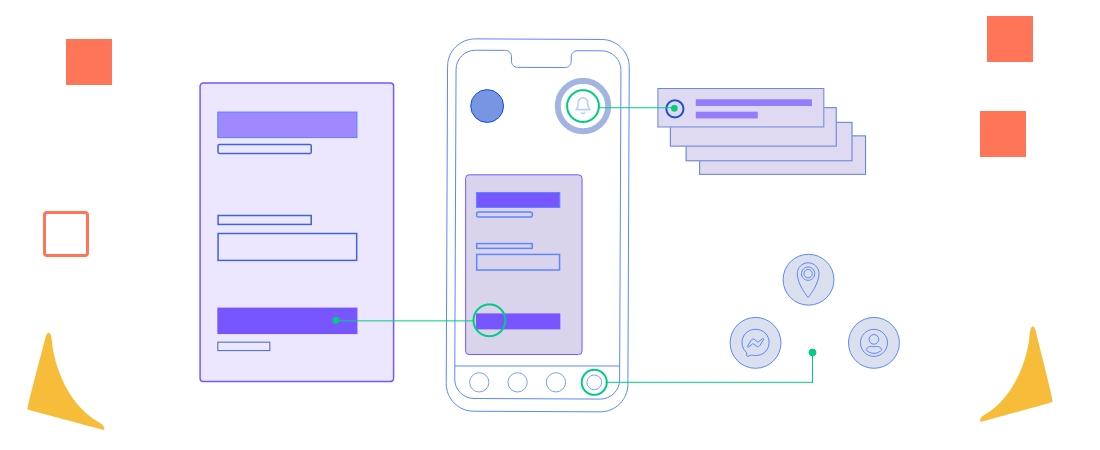
Maximizing interaction is about deepening the connection between users and apps. Interactive videos, gamification elements, storytelling, emotional design, and expressive microcopy all play a role. Designers are experimenting with these techniques to create experiences that feel more conversational and engaging, rather than static.
Making apps suitable for larger screens
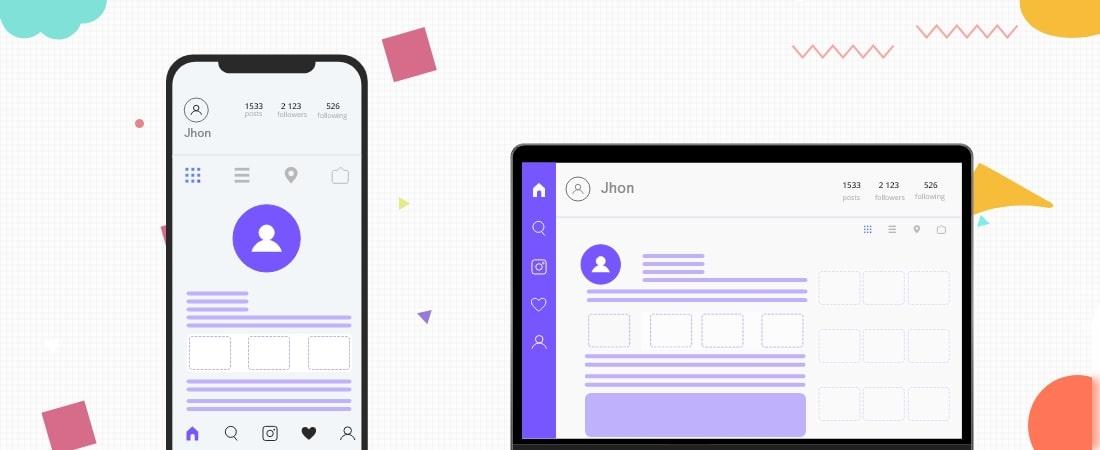
With large-screen devices, foldables, and in-car displays on the rise, UI patterns must adapt. Google's Material Design updates support more flexible layouts across screen sizes. Designing for large screens means rethinking navigation, layout density, and ergonomics to ensure comfort and clarity across all devices.
Glassmorphism
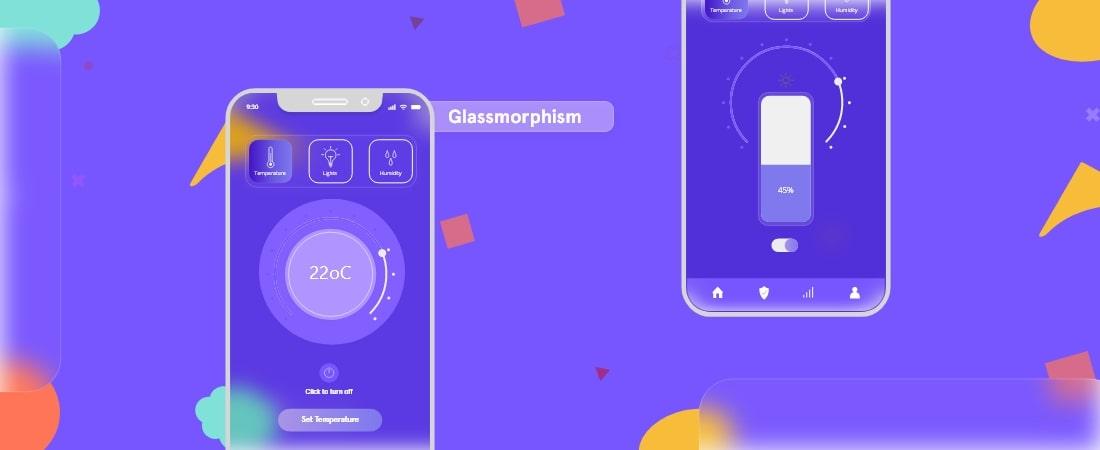
Glassmorphism imparts a frosted-glass effect to interfaces by combining transparency, blur, and soft gradients. Popularized by Apple and adopted widely, this style helps highlight key content while keeping backgrounds visually rich but unobtrusive. It works best when used sparingly with strong contrast and clear hierarchy.
Neumorphism
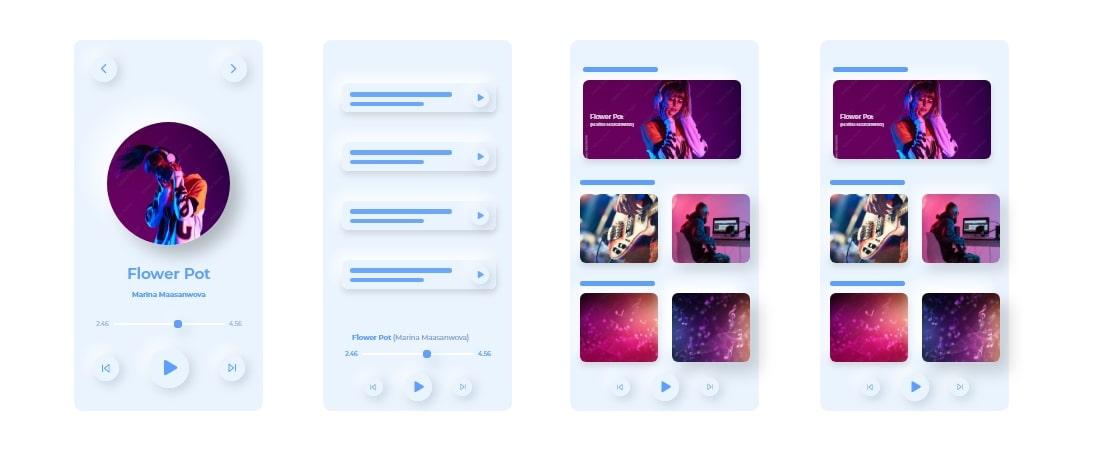
Neumorphism (or Neomorphic design) blends skeuomorphism with flat design, creating soft, extruded components that feel tactile. While visually attractive, it must be used with care to avoid contrast issues and maintain accessibility, particularly for critical controls and text.
Bottom navigation
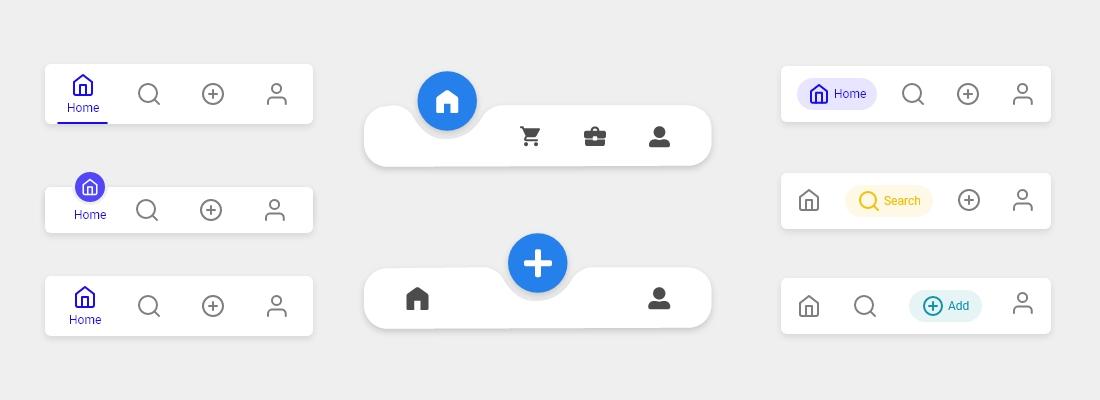
As screens grow larger, bottom navigation patterns keep primary actions within easy reach. Bottom sheets, tab bars, and gesture-rich interactions help users move quickly through content with one hand. Done well, bottom navigation improves discoverability and comfort.
App color schemes
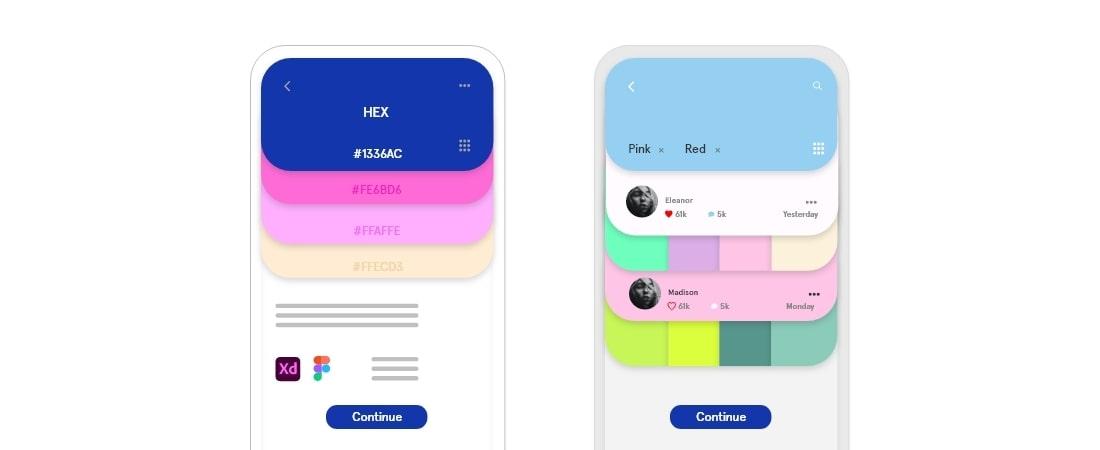
Modern color systems emphasize harmony, accessibility, and expressiveness. Designers are working with analogous palettes, layered tones, and carefully chosen accents to highlight important information. Monochrome palettes, bold accent colors, and soft gradients all help build distinct brand identities.
Minimalism
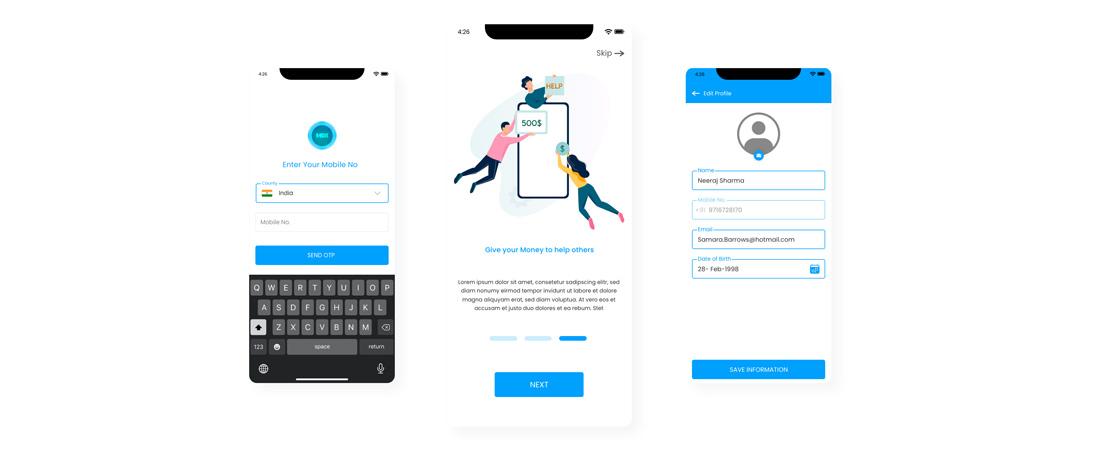
Minimalist interfaces cut through clutter by focusing on essentials: clear hierarchy, generous whitespace, and purposeful interactions. This is especially important as users grow impatient with noisy screens filled with pop-ups, banners, and distractions. Minimalism supports better comprehension and calmer experiences.
Loading screens
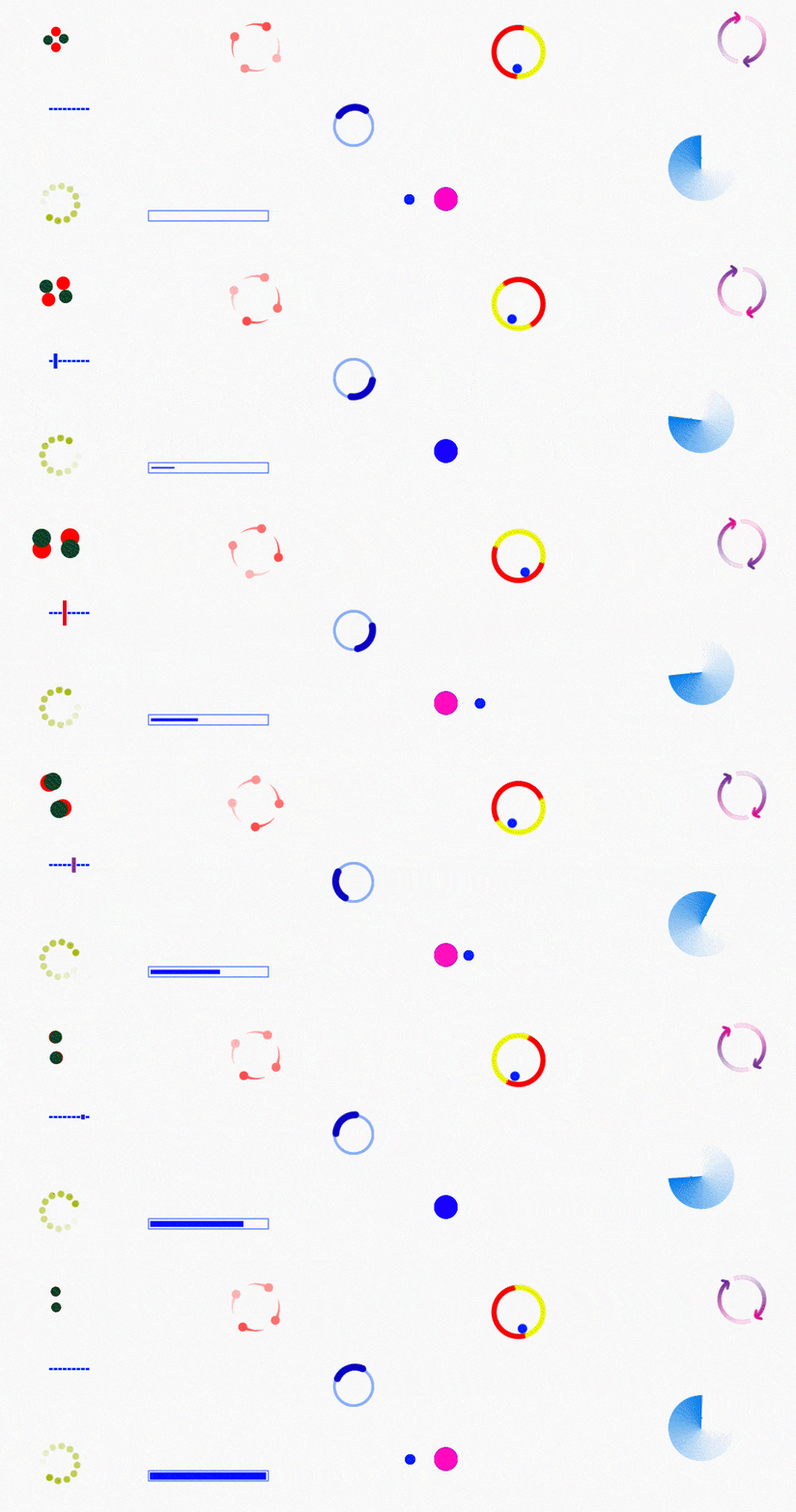
Instead of simple spinners, modern loading experiences use playful animations, skeleton screens, and progress indicators that reduce perceived wait time. Thoughtful loading states reassure users and keep them engaged while content is fetched or computed.
Best UX design trends for 2022 and further
Modern apps succeed when they are carefully woven from deep user research and continuous feedback. Here are some UX directions that stand out for 2022 and beyond.
Mobile-first design and device synchronization
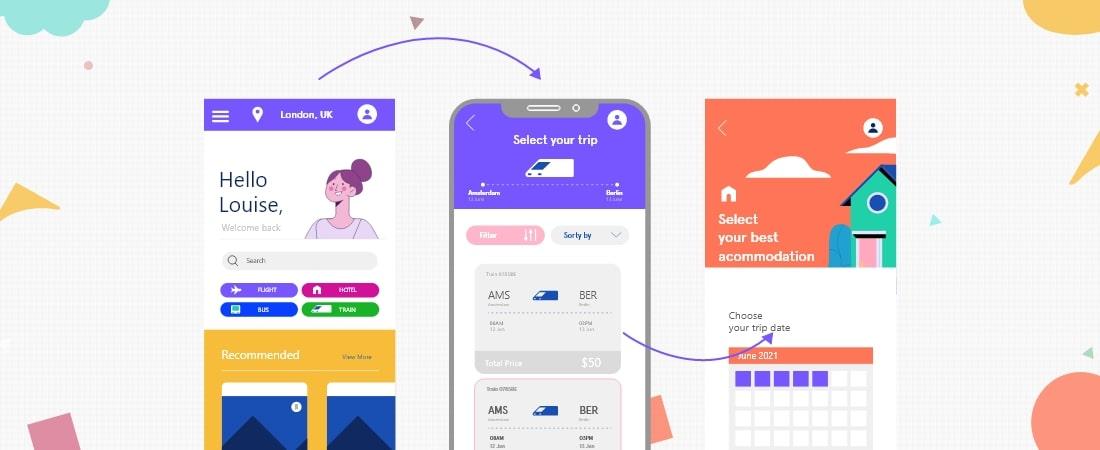
With over 90% of internet users on mobile devices, mobile-first experiences remain a top UX priority. Designing for small screens first and then scaling up ensures clarity, performance, and focus across all form factors.
Personalized and localized experiences
Users stick with apps that feel relevant to their context. That means personalization (based on preferences, history, and behavior) and localization (respecting regional norms and expectations). Choices like preferred login method, language, and content format should adapt to user segments, not force a single pattern on everyone.
AR/VR in B2B experiences

AR and VR are moving beyond consumer apps into B2B scenarios: training, remote collaboration, product visualization, and more. These technologies demand new UX patterns that balance immersion, comfort, and accessibility while avoiding motion sickness or overload.
Voice user interfaces
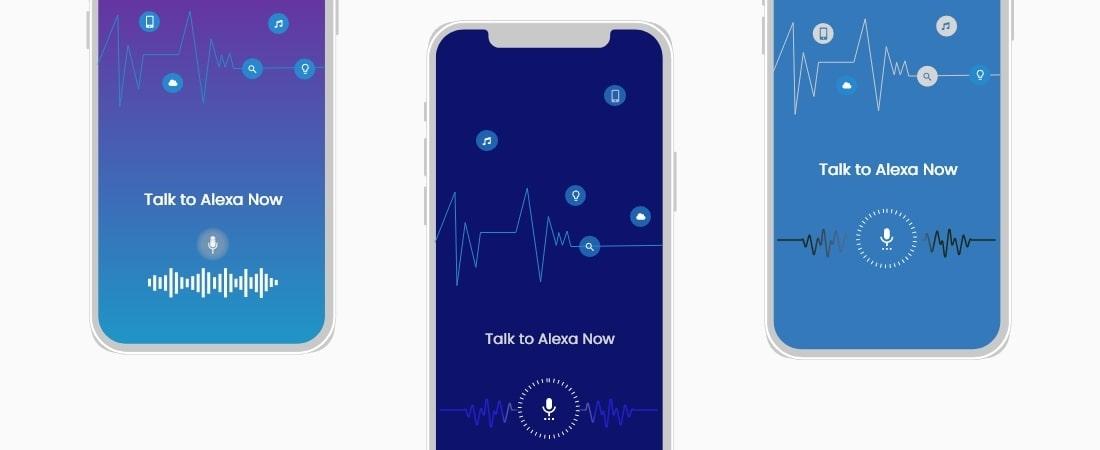
Voice UI, popularized by Alexa, Google Assistant, and Siri, is now common in everyday interactions. Designing good voice experiences means crafting clear conversational flows, handling errors gracefully, and always providing an accessible fallback for visual or touch input.
Microinteractions
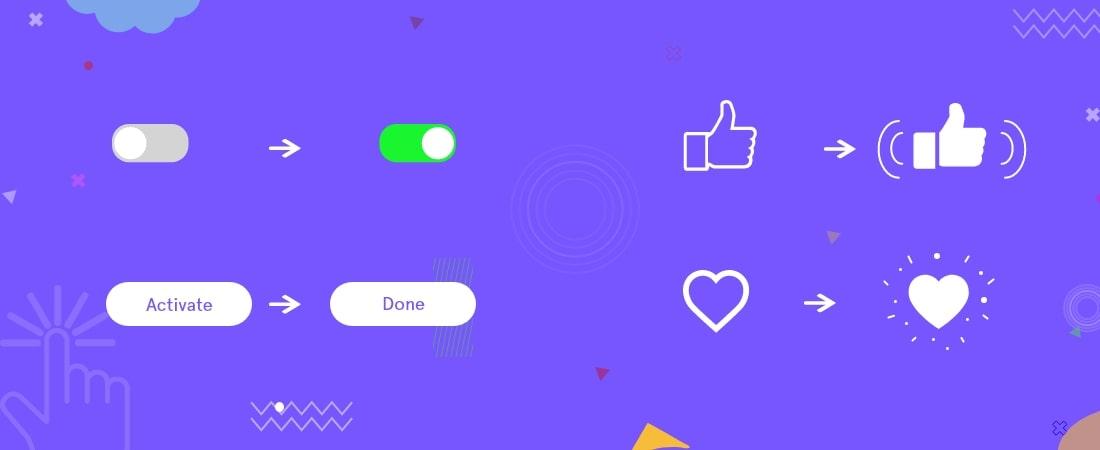
Microinteractions are small, subtle feedback moments — button presses, toggles, hover states, and animated transitions. They improve clarity, reduce cognitive load, and build emotional connection with the product when executed with intent and care.
Superapps
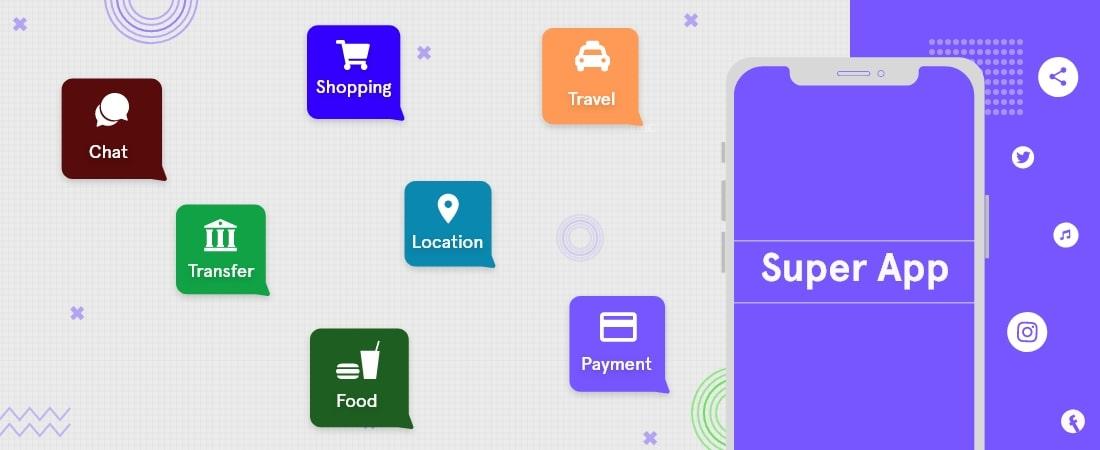
Superapps bundle multiple services into a single ecosystem (e.g. WeChat, Gojek). They require careful UX design to keep navigation clean, features discoverable, and performance snappy while still offering breadth of functionality.
Metaverse-inspired experiences

The Metaverse vision points toward more persistent, shared digital spaces. For UX designers, this means thinking about identity, presence, social cues, and safety in virtual environments, not just traditional screens.
What makes an app design successful?
Ultimately, great app design means first-rate standards and user-specific decisions guided by research. Ever-trending apps contain smooth interactions, sustained engagement, and a clear focus on user goals.
That requires deep user research, data-informed iteration, and tight alignment between visual design and functionality. As a UI/UX design company, we emphasize truthful, expressive designs that best reflect our clients' product goals.
Conclusion
The coming years will bring unique possibilities centered on bringing users closer together through digital experiences. UI/UX designers will face the challenge of crafting adaptable, lively, and user-focused products that stand the test of time.
It's unrealistic to adopt every trend at once. The real win is to choose the trends that align with your goals, users, and brand — and execute them with clarity and purpose.
If you want deeper guidance on which trends best suit your app idea, connect with us.